
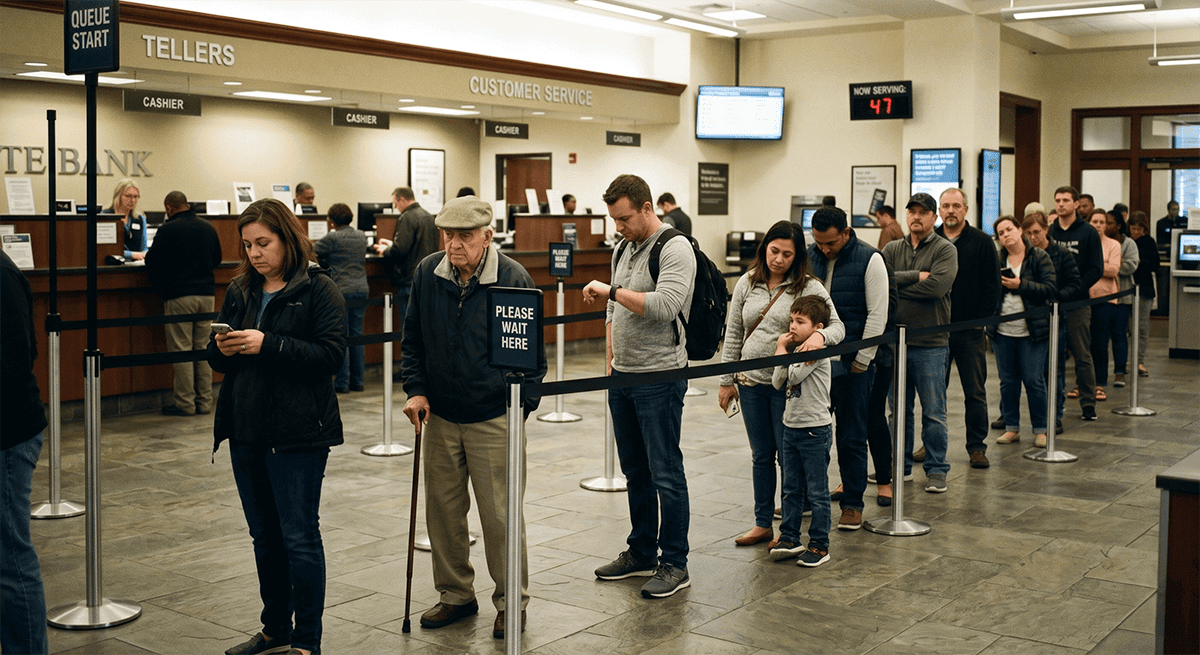
Imagine a premium retail banking branch that has invested millions in modern architecture, intensive staff training, and highly competitive mortgage rates. A customer walks into this branch to renegotiate the spread on their mortgage. After a detailed consultation, the account manager secures an excellent rate, saving the customer thousands of euros.
By all traditional operational metrics, this is a massive victory. The service was flawless, the product was competitive, and the problem was solved.
Yet, a week later, when that customer describes their experience to a colleague, their review is strikingly negative. They don't rave about the interest rate. Instead, they complain about the cold, chaotic 35 minutes they spent standing near the entrance, gripping a crumpled paper ticket, entirely unsure of when they would be called.
This isn't an isolated case of customer irritability. It is a predictable flaw in human psychology defined by Nobel laureate Daniel Kahneman as the Peak-End Rule.
Kahneman’s research revealed that human beings do not evaluate an experience by taking the average of every moment. Instead, we judge an entire event based almost exclusively on two specific touchpoints: the emotional peak (the most intense moment) and the end (how the experience concludes).
The diverse lobby: one space, wildly different human stories
The diverse lobby: one space, wildly different human stories
- A local retail business owner trying to drop off cash bags quickly before their store opens.
- A nervous couple arriving for a life-altering, pre-booked consultation to buy their first home.
- An elderly customer who needs assistance with a simple cash deposit or checking a balance.
- An existing client wanting to renegotiate a complex corporate loan or mortgage spread.
The psychological mechanics of the wait: occupied vs. unoccupied time
The psychological mechanics of the wait: occupied vs. unoccupied time

How intelligent queue management rewrites the customer memory
How intelligent queue management rewrites the customer memory
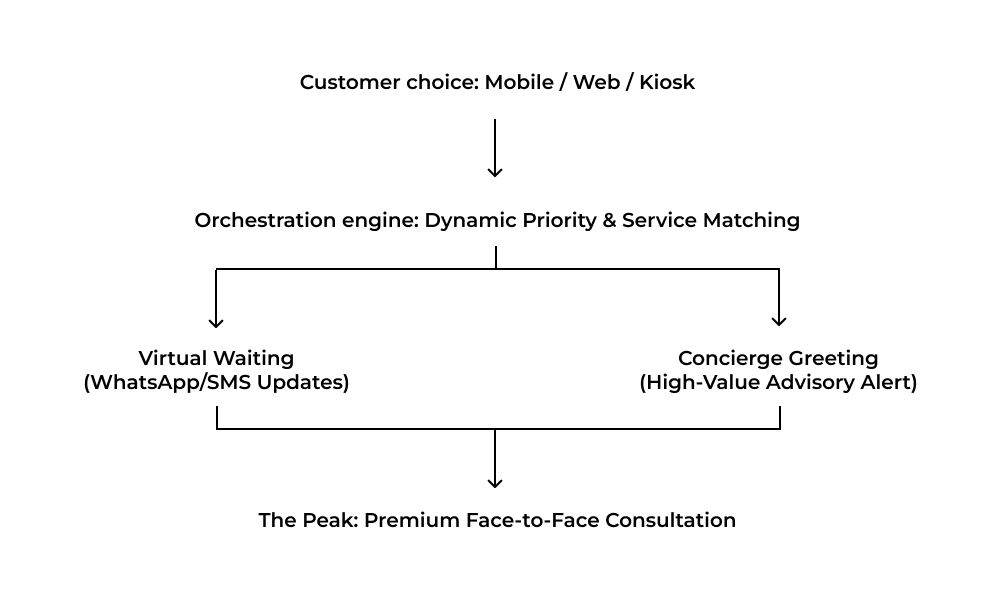
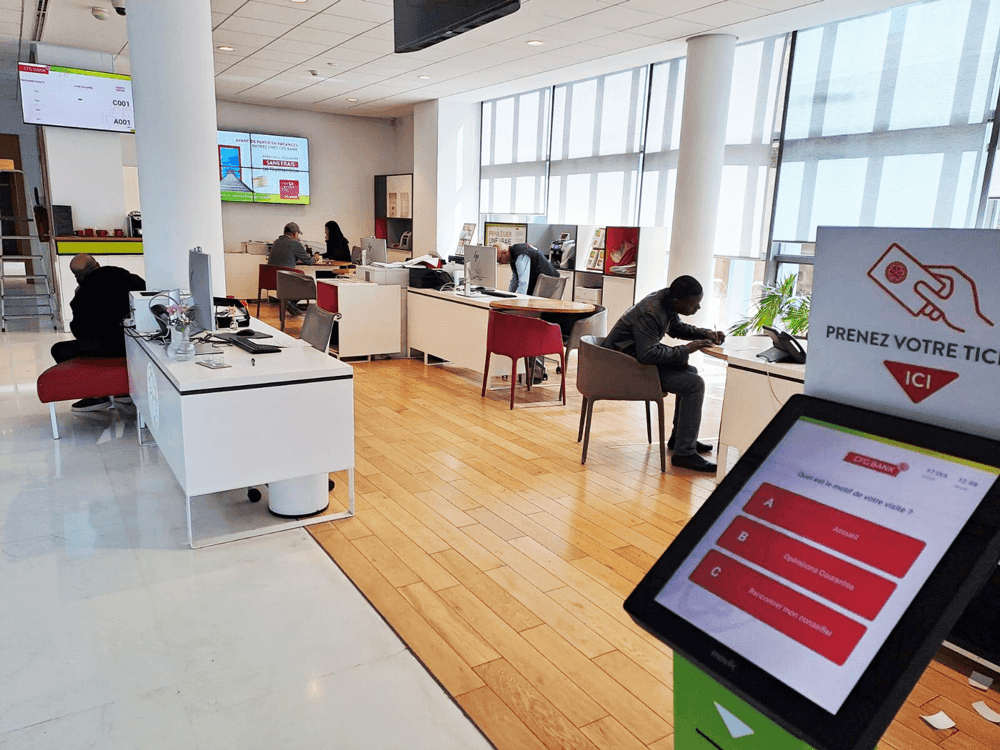
1. Purpose-driven self-service and kiosks
1. Purpose-driven self-service and kiosks
2. Smarter Waiting via SMS and WhatsApp Notifications
2. Smarter Waiting via SMS and WhatsApp Notifications
3. Synchronized hybrid journeys (Web-to-Branch)
3. Synchronized hybrid journeys (Web-to-Branch)
The frontline dividend: protecting staff from burnout
The frontline dividend: protecting staff from burnout
Conclusion: stop managing Lines, start building retention
Conclusion: stop managing Lines, start building retention
Imagine a premium retail banking branch that has invested millions in modern architecture, intensive staff training, and highly competitive mortgage rates. A customer walks into this branch to renegotiate the spread on their mortgage. After a detailed consultation, the account manager secures an excellent rate, saving the customer thousands of euros.
By all traditional operational metrics, this is a massive victory. The service was flawless, the product was competitive, and the problem was solved.
Yet, a week later, when that customer describes their experience to a colleague, their review is strikingly negative. They don't rave about the interest rate. Instead, they complain about the cold, chaotic 35 minutes they spent standing near the entrance, gripping a crumpled paper ticket, entirely unsure of when they would be called.
This isn't an isolated case of customer irritability. It is a predictable flaw in human psychology defined by Nobel laureate Daniel Kahneman as the Peak-End Rule.
Kahneman’s research revealed that human beings do not evaluate an experience by taking the average of every moment. Instead, we judge an entire event based almost exclusively on two specific touchpoints: the emotional peak (the most intense moment) and the end (how the experience concludes).
The diverse lobby: one space, wildly different human stories
The diverse lobby: one space, wildly different human stories
- A local retail business owner trying to drop off cash bags quickly before their store opens.
- A nervous couple arriving for a life-altering, pre-booked consultation to buy their first home.
- An elderly customer who needs assistance with a simple cash deposit or checking a balance.
- An existing client wanting to renegotiate a complex corporate loan or mortgage spread.
The psychological mechanics of the wait: occupied vs. unoccupied time
The psychological mechanics of the wait: occupied vs. unoccupied time
How intelligent queue management rewrites the customer memory
How intelligent queue management rewrites the customer memory
1. Purpose-driven self-service and kiosks
1. Purpose-driven self-service and kiosks
2. Smarter Waiting via SMS and WhatsApp Notifications
2. Smarter Waiting via SMS and WhatsApp Notifications
3. Synchronized hybrid journeys (Web-to-Branch)
3. Synchronized hybrid journeys (Web-to-Branch)
The frontline dividend: protecting staff from burnout
The frontline dividend: protecting staff from burnout
Conclusion: stop managing Lines, start building retention
Conclusion: stop managing Lines, start building retention