
Hey, have you noticed this?
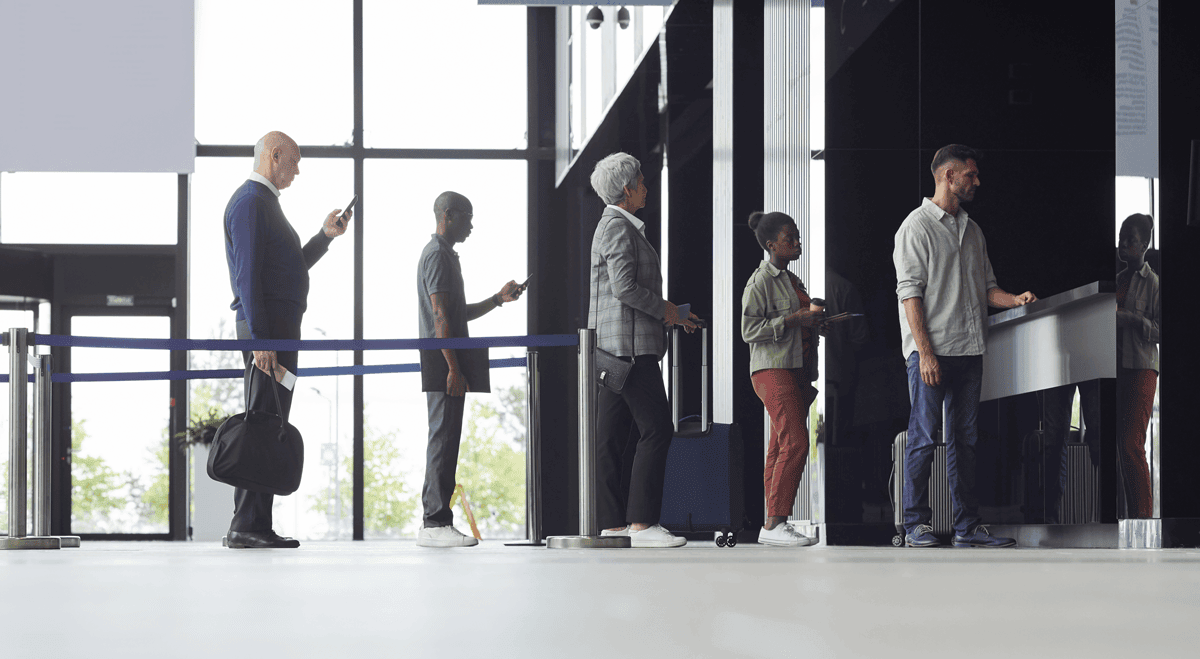
Let’s talk about something that happens to you probably once a week. You walk into a store because you need to fix something with your phone plan, or you need to talk to someone at the bank about a credit card. You walk in, look at the line, and your heart just... sinks.
There’s this "invisible wall." You see six people standing in a row, staring at the ceiling or their shoes, and suddenly, you feel exhausted. You haven't even started waiting yet, but your brain is already telling you to turn around and leave.
Why does that happen? Why is it that you can spend forty-five minutes happily wandering around a supermarket looking for a specific type of hot sauce, but five minutes standing in a fixed line at the bank feels like an absolute eternity?
It’s not just you being impatient. It’s actually how our brains are wired. It’s called the "Mirror Effect," and it’s time we stopped blaming ourselves for "hating lines" and started realizing that the way we've been asked to wait for decades is just... well, broken.
The "empty minute" problem
The "empty minute" problem
Think about the last time you were stuck in a static line. You’re physically anchored to one spot. You can’t move more than two feet without losing your place. You’re watching the back of someone’s head.
In psychology, there’s a famous rule coined by expert David Maister:
"Occupied time feels shorter than unoccupied time."
It’s so simple, but it changes everything. When you’re walking through a store looking at products, your brain is busy. It’s "occupied." You’re making choices, you’re looking at colors, you’re thinking about what you need. Time flies. But the second you join a physical queue, your brain goes into "monitoring mode." Since you have nothing else to do, your brain decides to focus 100% of its energy on the passage of time.
Every second feels like two. You start noticing the clock on the wall. You start getting annoyed that the person at the counter is taking too long (even if they’re actually being quite fast). You are literally boring yourself into a bad mood.
The 36% "frustration tax"
The 36% "frustration tax"
The 36% "frustration tax"
It gets weirder. Richard Larson, an MIT professor known as "Dr. Queue," found that people consistently overestimate how long they’ve been waiting by about 36%.
Think about that. If you wait for 10 minutes in a boring, static line, your brain tells you it’s been nearly 14 minutes. You aren't just losing time; you're paying a "frustration tax" that makes the service feel worse than it actually is.
This is why you often see mirrors next to elevators in big office buildings. It wasn't to make the elevators faster, it was to give people something to do (look at themselves) so the wait felt shorter. When you give the brain a distraction, you stop the "Mirror Effect" from doubling the time in your head.
The "freedom" factor: why being trapped is the real enemy
The "freedom" factor: why being trapped is the real enemy
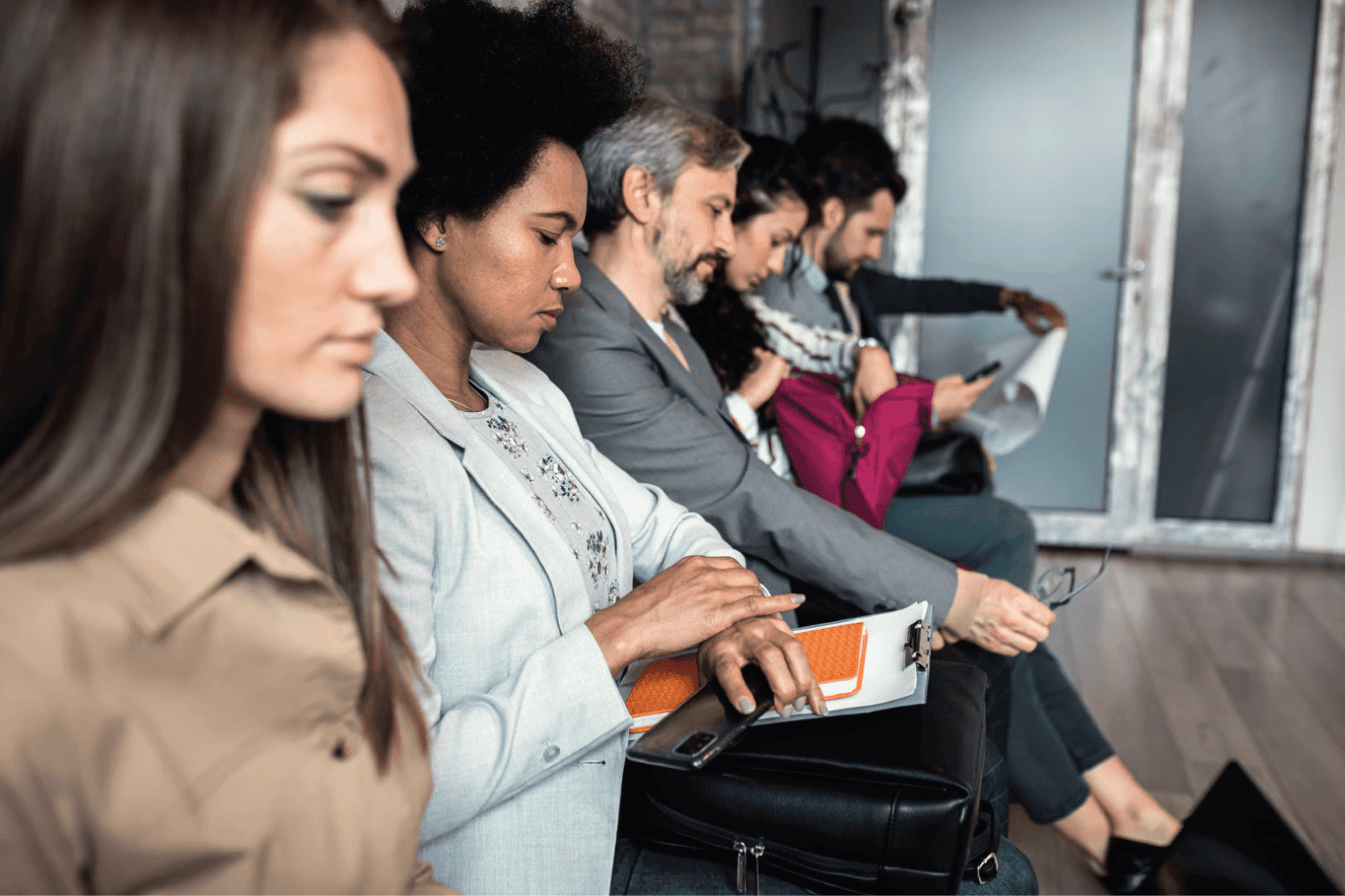
Here’s the part that most store owners or bank managers don't realize: Waiting isn't the problem. Being trapped is.
As humans, we love autonomy. We like being in control of our bodies and our time. When a business tells you, "Stand in this roped-off area and don't move until we call you," they are taking away your autonomy. They’ve turned you into a number in a cage.
This is where the right moment comes in for companies like Moviik. If that same bank or telecom shop gave you a Digital Ticket on your phone and said, "Hey, we’ll text you when it’s your turn. Go grab a coffee or look at the new tablets over there," how would you feel?
Suddenly, that 15-minute wait isn't a burden. It’s a 15-minute break. You’ve been given your freedom back. You’re "occupied" again. You can walk, and as we established, walking makes time feel like it's moving at a normal speed.
Why this matters for the business owner
Why this matters for the business owner
If you own a retail shop, a bank branch, or a telecom center, you might think, "Well, a line shows I'm busy! It shows I'm popular!"
Actually, a long physical line is usually a "Keep Out" sign. In the industry, we call this "Balking." It’s when a customer looks at the crowd, decides their time is more valuable than your service, and walks out. You lose the sale, and they leave with a bad taste in their mouth.
Even worse? Think about your staff. If you’re the person behind the counter and you see a line of twenty grumpy, staring people, you’re going to feel "hunted." You’ll rush through the service to try and lower the pressure, you might make mistakes, and you'll definitely end the day feeling totally drained.
When you remove the physical line and replace it with a digital one, the atmosphere in the room changes instantly. It’s quieter. It’s calmer. People are sitting down, browsing the shop, or finishing an email on their phone. When they finally get to the counter, they aren't angry, they’re ready to engage.
How Moviik fixes the "Vibe"
How Moviik fixes the "Vibe"
This is exactly why we do what we do. We aren't just selling "software" or "kiosks." We’re selling a better mood for everyone involved.
With a Digital Ticket, the customer joins the queue through their own phone (via QR code or a web link on the store website). They don’t have to touch a communal screen if they don’t want to, and they definitely don’t have to stand in a line. They can wait while sitting in a comfortable chair or while looking at your products.
By the time their phone buzzes to tell them it's their turn, they haven't been "waiting" in their mind, they’ve just been hanging out. As David Maister also said:
"Anxiety makes waits seem longer." By giving people a clear notification on their phone, you take away the "Did they forget me?" anxiety. You replace it with certainty.

The advantage for the store owner (the "invisible" profit)
The advantage for the store owner (the "invisible" profit)
The advantage for the store owner (the "invisible" profit)
For the owner, this isn't just about being "nice." It's about the bottom line. When customers aren't stuck in a line, they are browsing.
In a Retail store, a customer waiting for the service desk might find two more items to buy while they wait "virtually."
In a Telecom store, they might spend that time playing with the latest flagship phone, which makes them much more likely to upgrade when they finally talk to the agent.
In a Bank, they might read about new investment opportunities on your digital displays because they aren't stressed about their spot in line.
Let’s get real: the future is "lineless"
Let’s get real: the future is "lineless"
Let’s get real: the future is "lineless"
We live in a world where we can order a pizza, a taxi, and a movie from our couch in three clicks. Why are we still standing in physical lines like it’s 1985?
The businesses that "get it" are the ones that realize the Human Journey is the most important part of the sale. If the journey starts with a frustrating, boring, "unoccupied" wait, the sale is already at risk before the customer even says "hello."
But if you give the customer a way to wait on their own terms, you’re showing them respect. You’re saying, "We know your time is precious, so we aren't going to steal it from you."
The bottom line
The bottom line
The bottom line
Next time you find yourself standing in a line, feeling that familiar itch of annoyance, remember: it’s not your fault. Your brain is just reacting to the "Mirror Effect." You’re bored, you’re trapped, and your internal clock is lying to you.
And if you’re the one running the store? Give your customers (and your brain) a break. Move the line to their pockets, let them walk around, and watch how much happier everyone becomes. Because at the end of the day, we’re all just people trying to get things done and we’d all much rather be moving than standing still.
Hey, have you noticed this?
Let’s talk about something that happens to you probably once a week. You walk into a store because you need to fix something with your phone plan, or you need to talk to someone at the bank about a credit card. You walk in, look at the line, and your heart just... sinks.
There’s this "invisible wall." You see six people standing in a row, staring at the ceiling or their shoes, and suddenly, you feel exhausted. You haven't even started waiting yet, but your brain is already telling you to turn around and leave.
Why does that happen? Why is it that you can spend forty-five minutes happily wandering around a supermarket looking for a specific type of hot sauce, but five minutes standing in a fixed line at the bank feels like an absolute eternity?
It’s not just you being impatient. It’s actually how our brains are wired. It’s called the "Mirror Effect," and it’s time we stopped blaming ourselves for "hating lines" and started realizing that the way we've been asked to wait for decades is just... well, broken.
The "empty minute" problem
The "empty minute" problem
Think about the last time you were stuck in a static line. You’re physically anchored to one spot. You can’t move more than two feet without losing your place. You’re watching the back of someone’s head.
In psychology, there’s a famous rule coined by expert David Maister:
"Occupied time feels shorter than unoccupied time."
It’s so simple, but it changes everything. When you’re walking through a store looking at products, your brain is busy. It’s "occupied." You’re making choices, you’re looking at colors, you’re thinking about what you need. Time flies. But the second you join a physical queue, your brain goes into "monitoring mode." Since you have nothing else to do, your brain decides to focus 100% of its energy on the passage of time.
Every second feels like two. You start noticing the clock on the wall. You start getting annoyed that the person at the counter is taking too long (even if they’re actually being quite fast). You are literally boring yourself into a bad mood.
The 36% "frustration tax"
The 36% "frustration tax"
The 36% "frustration tax"
It gets weirder. Richard Larson, an MIT professor known as "Dr. Queue," found that people consistently overestimate how long they’ve been waiting by about 36%.
Think about that. If you wait for 10 minutes in a boring, static line, your brain tells you it’s been nearly 14 minutes. You aren't just losing time; you're paying a "frustration tax" that makes the service feel worse than it actually is.
This is why you often see mirrors next to elevators in big office buildings. It wasn't to make the elevators faster, it was to give people something to do (look at themselves) so the wait felt shorter. When you give the brain a distraction, you stop the "Mirror Effect" from doubling the time in your head.
The "freedom" factor: why being trapped is the real enemy
The "freedom" factor: why being trapped is the real enemy
Here’s the part that most store owners or bank managers don't realize: Waiting isn't the problem. Being trapped is.
As humans, we love autonomy. We like being in control of our bodies and our time. When a business tells you, "Stand in this roped-off area and don't move until we call you," they are taking away your autonomy. They’ve turned you into a number in a cage.
This is where the right moment comes in for companies like Moviik. If that same bank or telecom shop gave you a Digital Ticket on your phone and said, "Hey, we’ll text you when it’s your turn. Go grab a coffee or look at the new tablets over there," how would you feel?
Suddenly, that 15-minute wait isn't a burden. It’s a 15-minute break. You’ve been given your freedom back. You’re "occupied" again. You can walk, and as we established, walking makes time feel like it's moving at a normal speed.
Why this matters for the business owner
Why this matters for the business owner
If you own a retail shop, a bank branch, or a telecom center, you might think, "Well, a line shows I'm busy! It shows I'm popular!"
Actually, a long physical line is usually a "Keep Out" sign. In the industry, we call this "Balking." It’s when a customer looks at the crowd, decides their time is more valuable than your service, and walks out. You lose the sale, and they leave with a bad taste in their mouth.
Even worse? Think about your staff. If you’re the person behind the counter and you see a line of twenty grumpy, staring people, you’re going to feel "hunted." You’ll rush through the service to try and lower the pressure, you might make mistakes, and you'll definitely end the day feeling totally drained.
When you remove the physical line and replace it with a digital one, the atmosphere in the room changes instantly. It’s quieter. It’s calmer. People are sitting down, browsing the shop, or finishing an email on their phone. When they finally get to the counter, they aren't angry, they’re ready to engage.
How Moviik fixes the "Vibe"
How Moviik fixes the "Vibe"
This is exactly why we do what we do. We aren't just selling "software" or "kiosks." We’re selling a better mood for everyone involved.
With a Digital Ticket, the customer joins the queue through their own phone (via QR code or a web link on the store website). They don’t have to touch a communal screen if they don’t want to, and they definitely don’t have to stand in a line. They can wait while sitting in a comfortable chair or while looking at your products.
By the time their phone buzzes to tell them it's their turn, they haven't been "waiting" in their mind, they’ve just been hanging out. As David Maister also said:
"Anxiety makes waits seem longer." By giving people a clear notification on their phone, you take away the "Did they forget me?" anxiety. You replace it with certainty.
The advantage for the store owner (the "invisible" profit)
The advantage for the store owner (the "invisible" profit)
The advantage for the store owner (the "invisible" profit)
For the owner, this isn't just about being "nice." It's about the bottom line. When customers aren't stuck in a line, they are browsing.
In a Retail store, a customer waiting for the service desk might find two more items to buy while they wait "virtually."
In a Telecom store, they might spend that time playing with the latest flagship phone, which makes them much more likely to upgrade when they finally talk to the agent.
In a Bank, they might read about new investment opportunities on your digital displays because they aren't stressed about their spot in line.
Let’s get real: the future is "lineless"
Let’s get real: the future is "lineless"
Let’s get real: the future is "lineless"
We live in a world where we can order a pizza, a taxi, and a movie from our couch in three clicks. Why are we still standing in physical lines like it’s 1985?
The businesses that "get it" are the ones that realize the Human Journey is the most important part of the sale. If the journey starts with a frustrating, boring, "unoccupied" wait, the sale is already at risk before the customer even says "hello."
But if you give the customer a way to wait on their own terms, you’re showing them respect. You’re saying, "We know your time is precious, so we aren't going to steal it from you."
The bottom line
The bottom line
The bottom line
Next time you find yourself standing in a line, feeling that familiar itch of annoyance, remember: it’s not your fault. Your brain is just reacting to the "Mirror Effect." You’re bored, you’re trapped, and your internal clock is lying to you.
And if you’re the one running the store? Give your customers (and your brain) a break. Move the line to their pockets, let them walk around, and watch how much happier everyone becomes. Because at the end of the day, we’re all just people trying to get things done and we’d all much rather be moving than standing still.